The efficiency AI brings to the table is too valuable to ignore. Tasks that once took hours like drafting content, creating rough visual concepts, analyzing data, or completing market research can now be done in minutes. For marketing teams and creative partners, this kind of speed is a major competitive advantage. Agencies and partners who refuse to adopt AI tools will quickly find themselves falling behind competitively to those who can move faster, test ideas more quickly, and produce more work with the same resources or less.
While AI tools have quickly become an important part of the creative process, the best results happen when humans lead the work. Think of AI as an assistant rather than the creator itself. Human creativity brings perspective, emotion, and real-world experience that AI simply doesn’t have. When creators use AI to support their ideas instead of replace them, the final work feels more authentic and intentional.
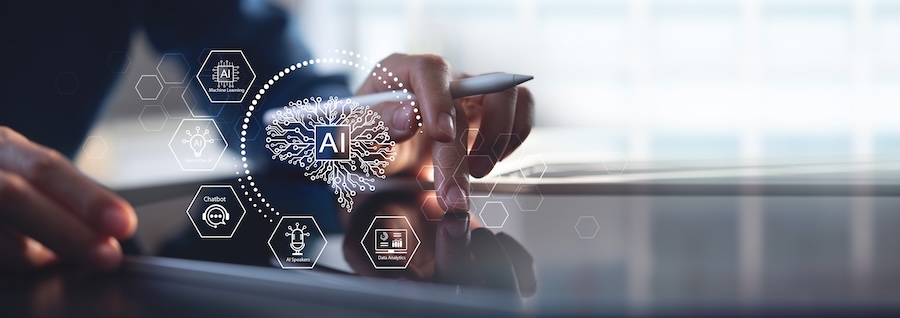
When I speak with clients and hear, “I made it with AI” I begin to cringe. Why? Graphic content from AI tools is trained on the same large pools of data and because of this its output has a similar look, tone, and structure. As more people use them the same way, the results feel repetitive and generic. This process is completely counterintuitive to the concept of “branding” that businesses spend much effort and money differentiating themselves in the marketplace.
There’s also an important strategic side to consider. When you rely heavily on AI to generate ideas, messaging, or creative direction, you’re using tools that are available to all your competitors. If your entire strategy comes from AI, there’s a real chance your competitor could end up with a version of the same solution. That’s why the thinking and strategy behind creative projects should stay human-led. In the end, the winning formula is a hybrid approach where AI powers speed and scale, while humans drive authenticity and connection.
*This post was human-led utilizing AI.